"FMtD" PDF Download
From Mud to Dust
ENIVRONMENTAL & TECHNICAL STUDIES JANOS BERGOB-SOWICZ
DIPLOMA 7, ARCHITECTURAL ASSOCIATION LONDON


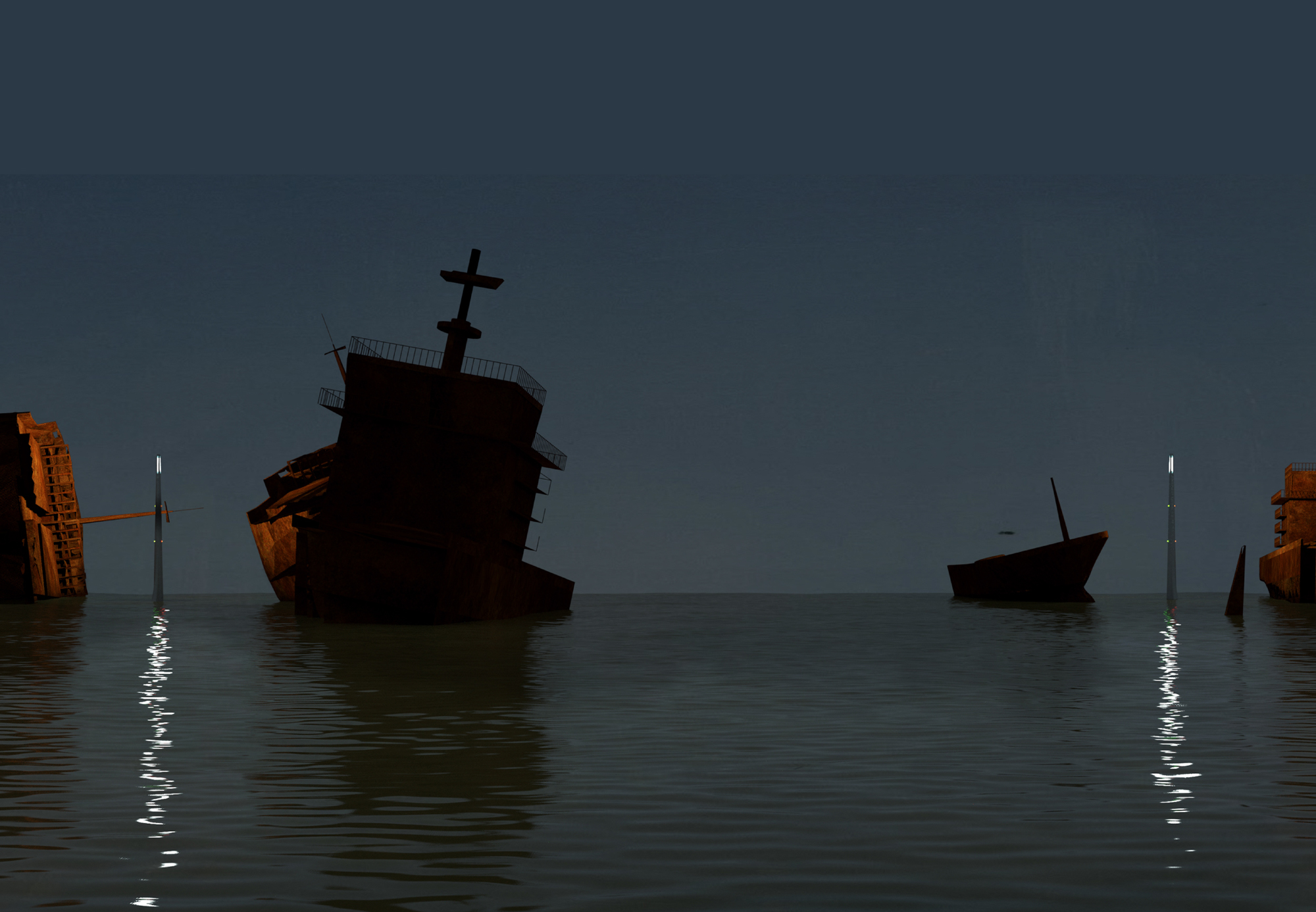
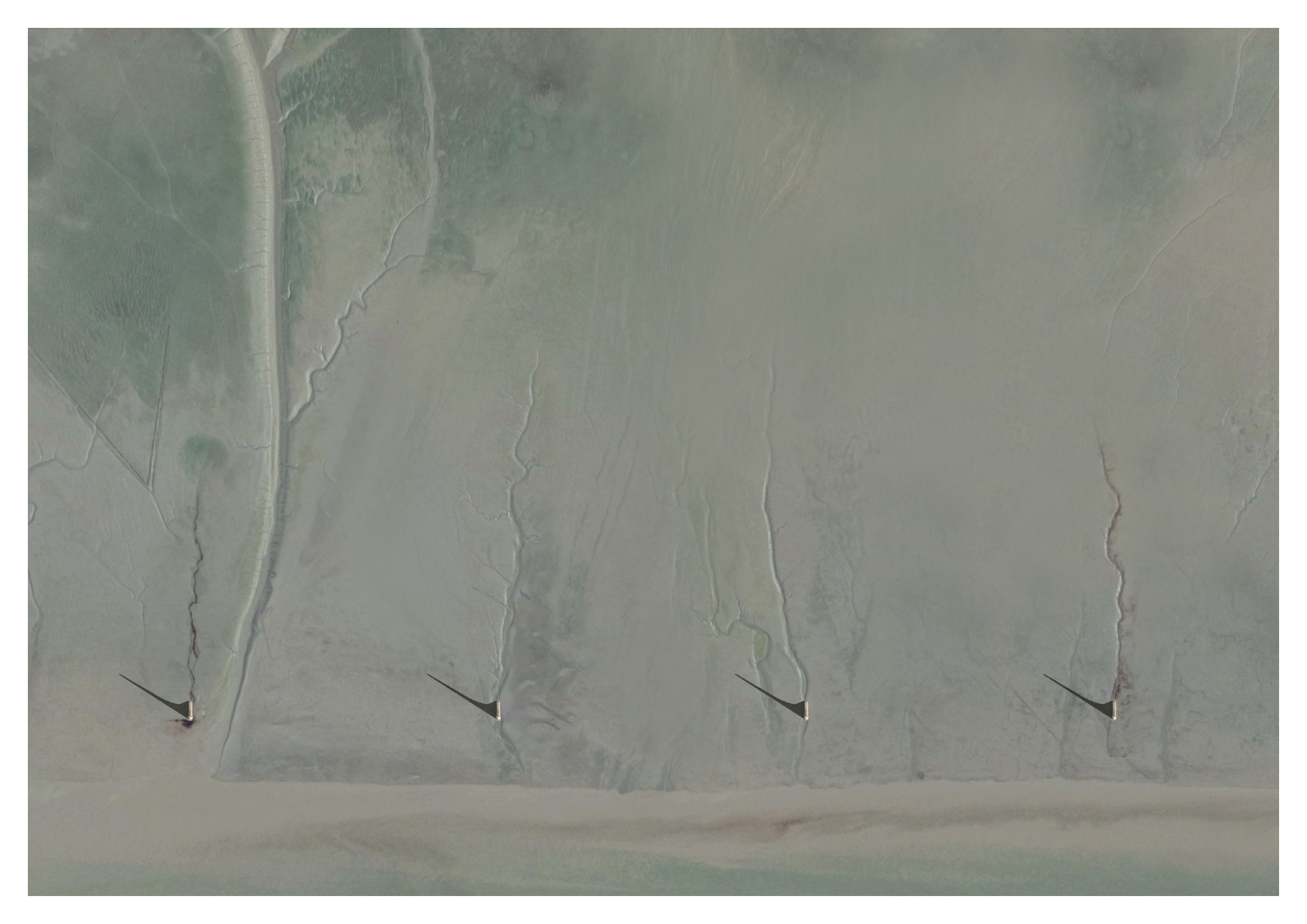
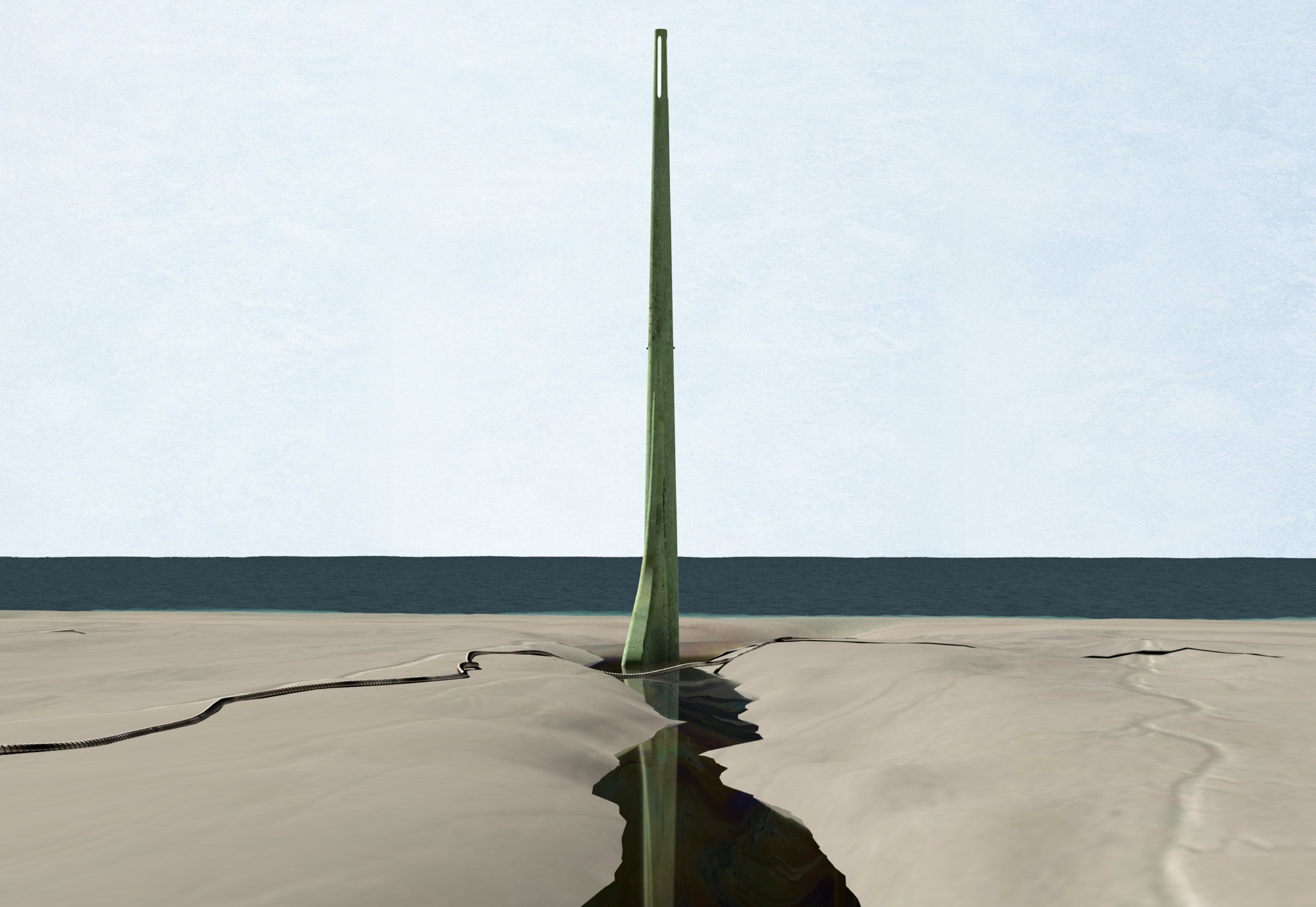
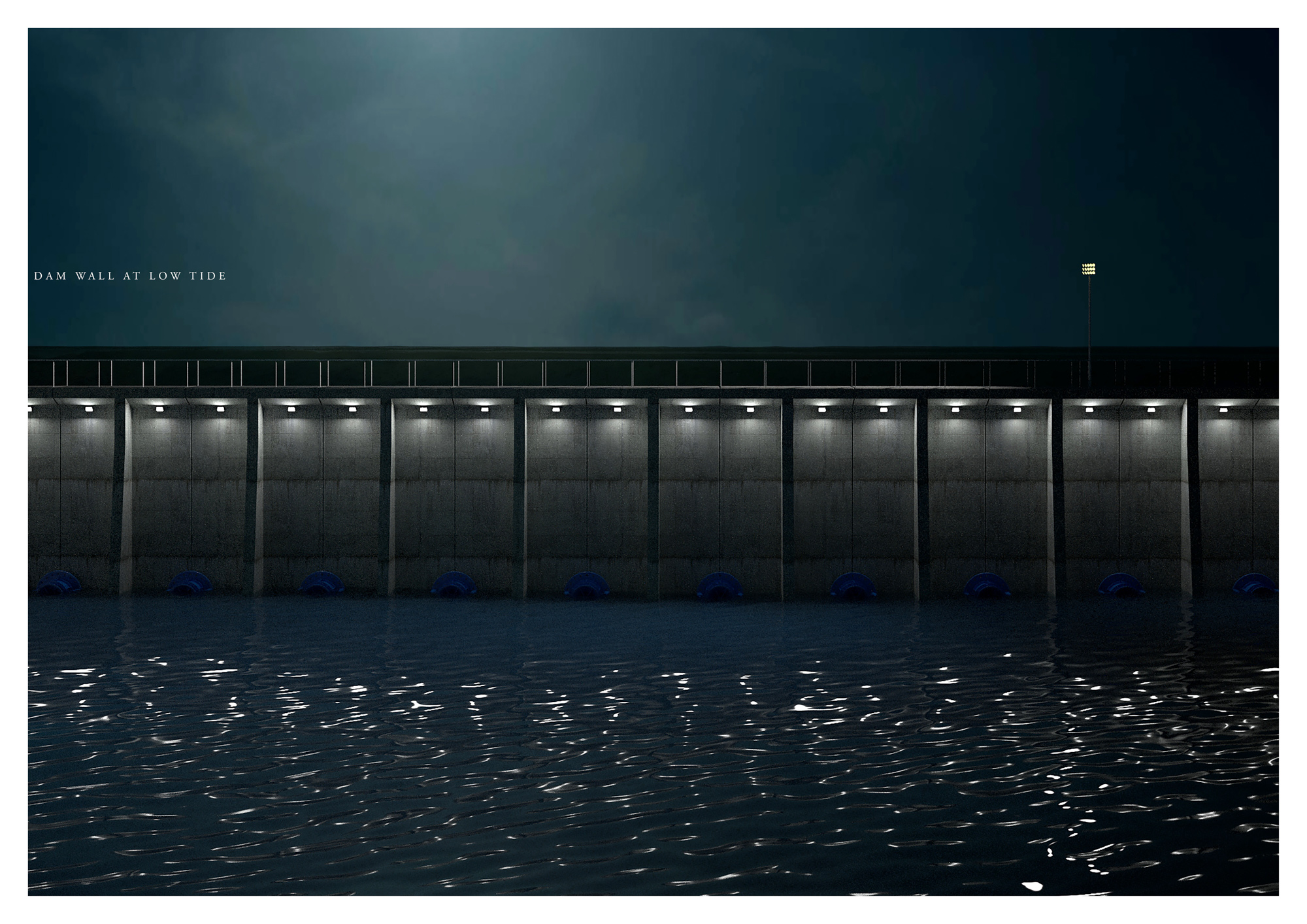
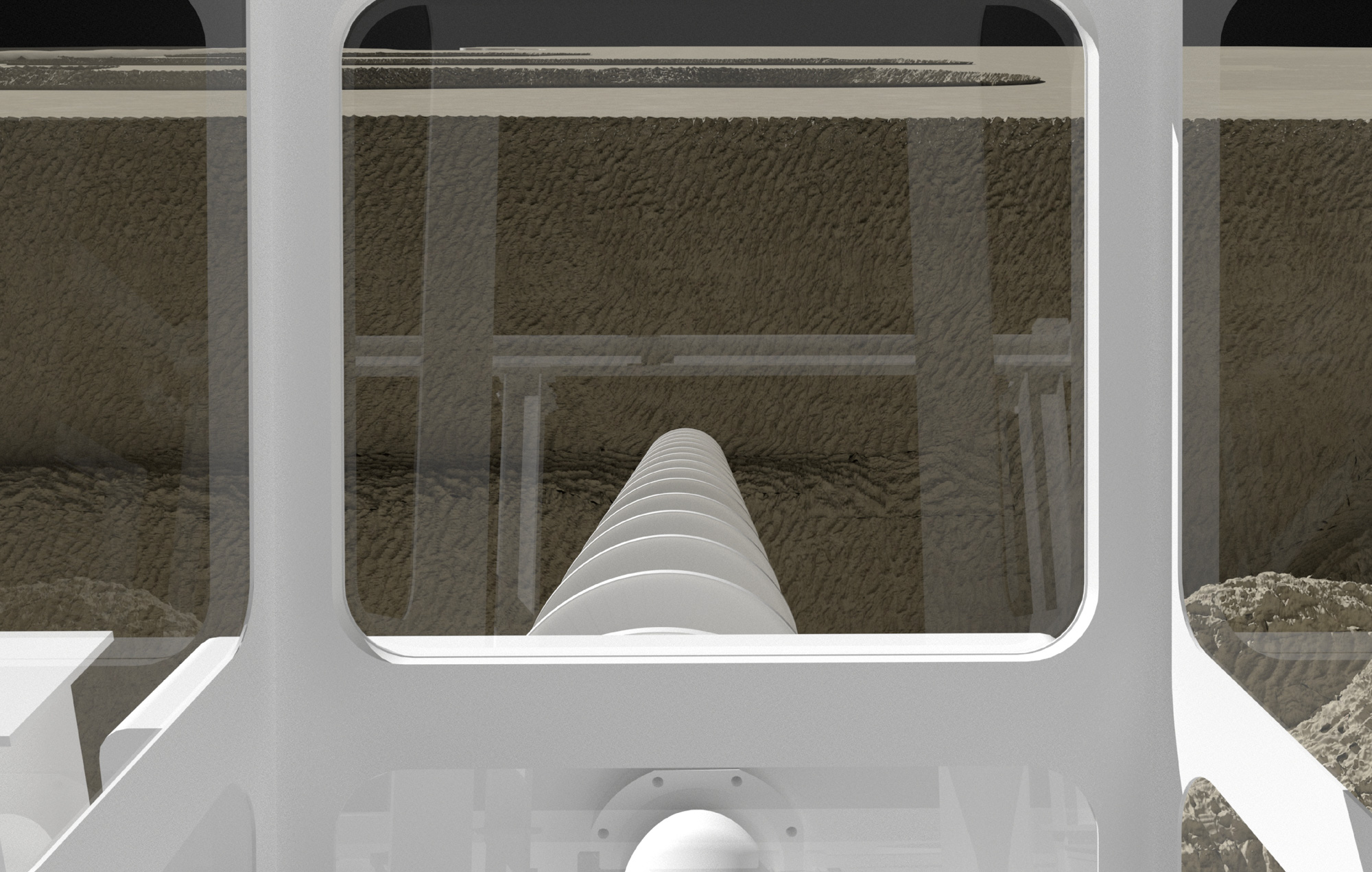
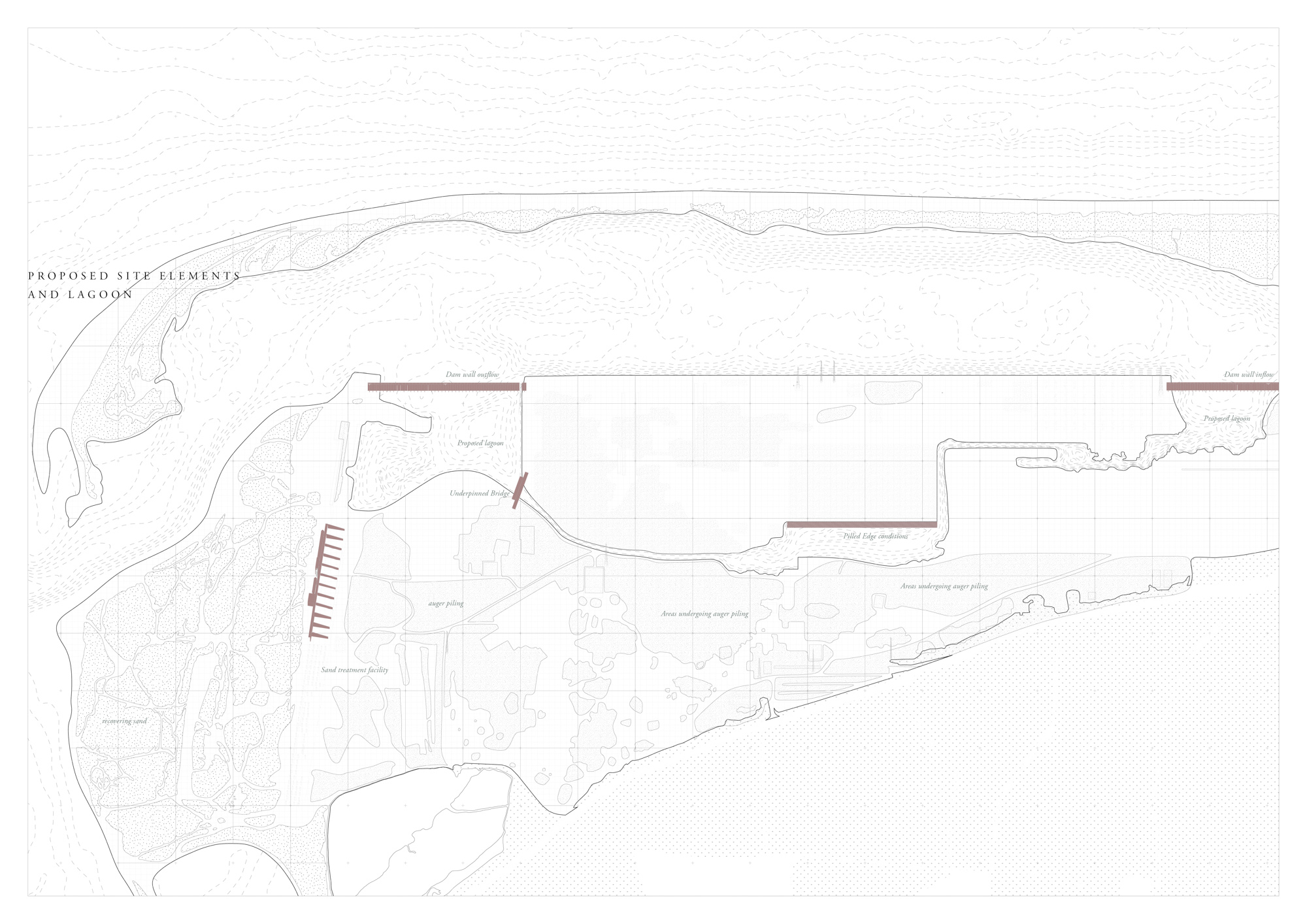
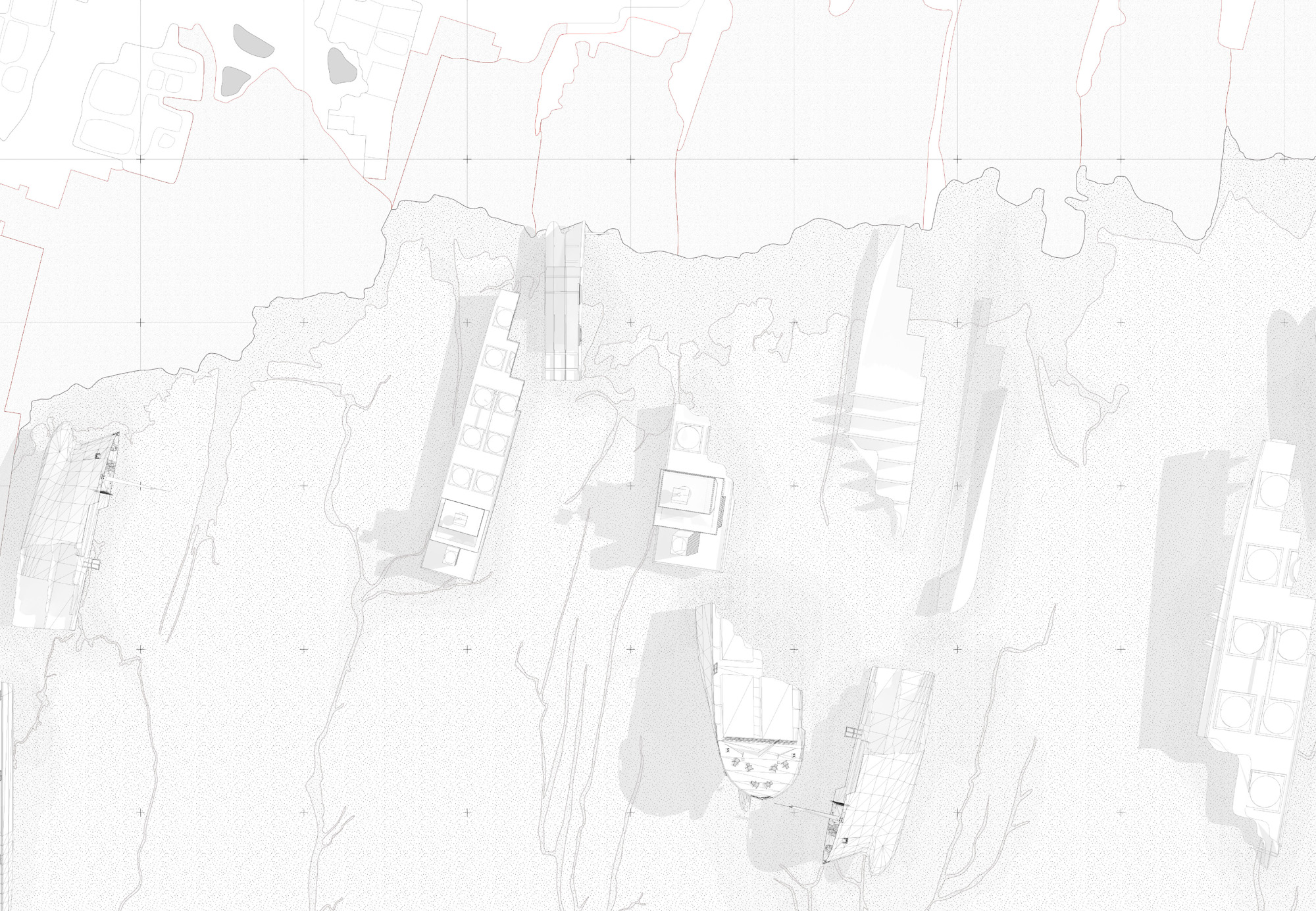
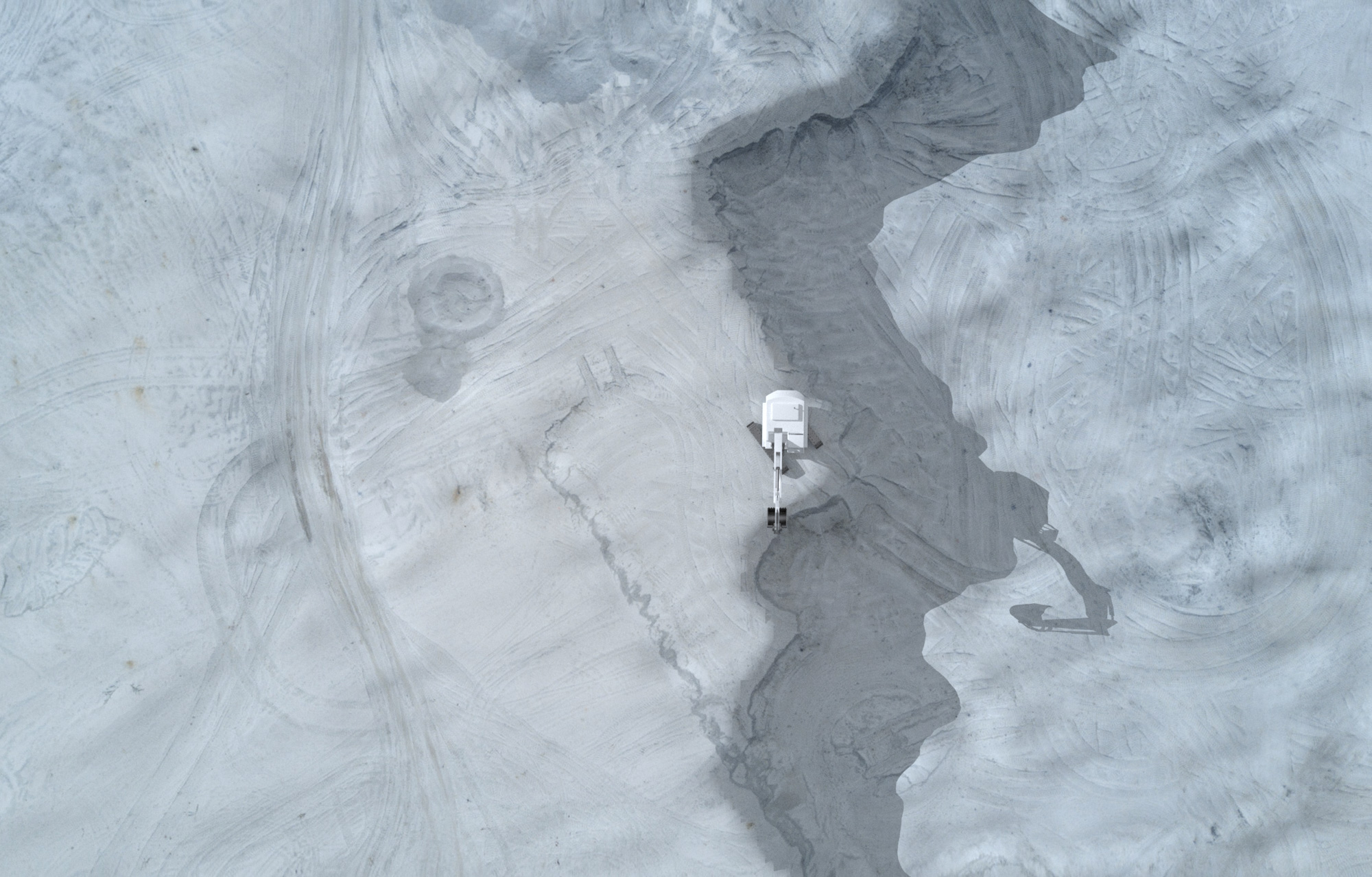
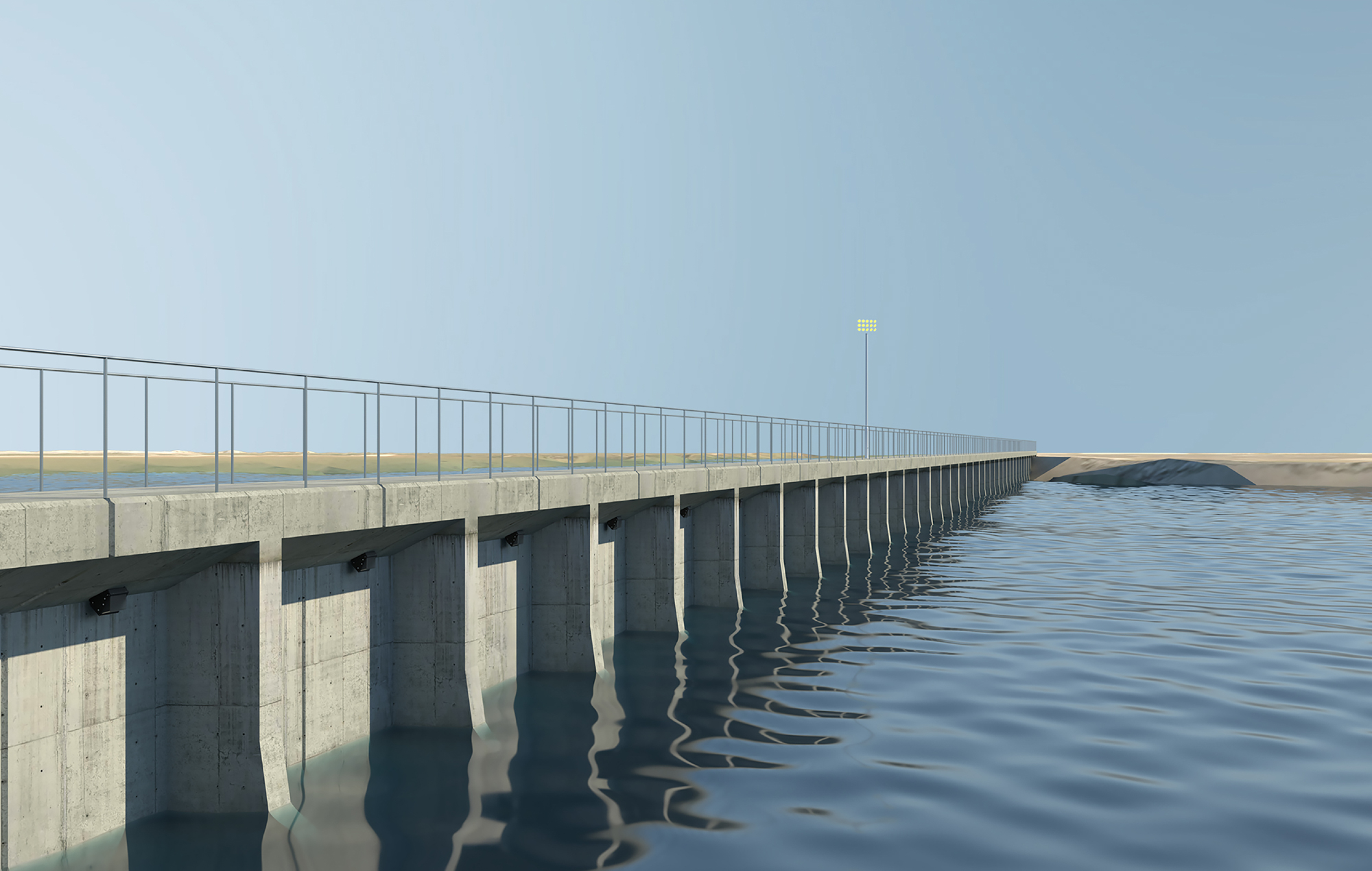
Fixed platforms are offshore rigs. Their steel or concrete legs are at- tached directly to the seabed, supporting the deck that is placed over the water surface. These structures are designed to permanently serve an oil or gas field and are not mobile. However, many rigs are floating structures and are used by the oil and gas industry for the purpose of exploration, production, drilling or supporting the operation of the other fixed offshore rigs. These types of rigs are classified as ‘vessels’.Given legislation does not specify where rigs must be decommissioned, decommissioning vessels or, ‘ship breaking’, can be carried out in Turkey and Bangladesh, where the natural configuration of land and sea (for example, a gradually sloping tidal shelf and extreme tidal activity) allows large ships to be beached. The landscape in Aliaga and Chittagong is permanently changed. In a process of self-burial, huge oil tankers are piloted inland and made to mount the beach at speed, inscribing long scars onto the landscape in their final act of beaching. With the sterns half-ashore, breakers can then cut in and dismantle the vessels laterally.2 Carcasses of ships and rigs are disassembled by blowtorches. Eventually the oil rig disappears, its traces can only be measured as particles of dust in the air, or in the ardent orange stains on the lapels of workers.The Impact of decommissioning can now only be measured as particles of dust, or the coloration of an entire landscape from a satellite. When there are fewer ships on the beach the landscape is stained rust red. What are the frameworks implemented that limit contamination? And where should they be? Is there a place for them in Europe or can they only exist in the distant shadowlands of remote beaches?
From Mud to Dust
ENIVRONMENTAL & TECHNICAL STUDIES JANOS BERGOB-SOWICZ
DIPLOMA 7, ARCHITECTURAL ASSOCIATION LONDON
"FMtD" PDF Download


Fixed platforms are offshore rigs. Their steel or concrete legs are at- tached directly to the seabed, supporting the deck that is placed over the water surface. These structures are designed to permanently serve an oil or gas field and are not mobile. However, many rigs are floating structures and are used by the oil and gas industry for the purpose of exploration, production, drilling or supporting the operation of the other fixed offshore rigs. These types of rigs are classified as ‘vessels’.Given legislation does not specify where rigs must be decommissioned, decommissioning vessels or, ‘ship breaking’, can be carried out in Turkey and Bangladesh, where the natural configuration of land and sea (for example, a gradually sloping tidal shelf and extreme tidal activity) allows large ships to be beached. The landscape in Aliaga and Chittagong is permanently changed. In a process of self-burial, huge oil tankers are piloted inland and made to mount the beach at speed, inscribing long scars onto the landscape in their final act of beaching. With the sterns half-ashore, breakers can then cut in and dismantle the vessels laterally.2 Carcasses of ships and rigs are disassembled by blowtorches. Eventually the oil rig disappears, its traces can only be measured as particles of dust in the air, or in the ardent orange stains on the lapels of workers.The Impact of decommissioning can now only be measured as particles of dust, or the coloration of an entire landscape from a satellite. When there are fewer ships on the beach the landscape is stained rust red. What are the frameworks implemented that limit contamination? And where should they be? Is there a place for them in Europe or can they only exist in the distant shadowlands of remote beaches?
ALL THE WORLD WILL BE YOUR ENEMY
Balloon Journey
Breaking Ground
Chaise 'too' longue
Continuous Monument
Drahtglas Sideboard
From Mud to Dust
First Base
Haus M Kochinsel
Hiding in Plain Sight
J2C U-Section Light
Oil lamps for "A Sky Taste of Rock"
Pendel Leuchte 140
Reflective Typography
Sathutu
Studio 11/11
Twin System
Twin System 'Cerise Edition'
Vertigo
Wand Leuchte 140
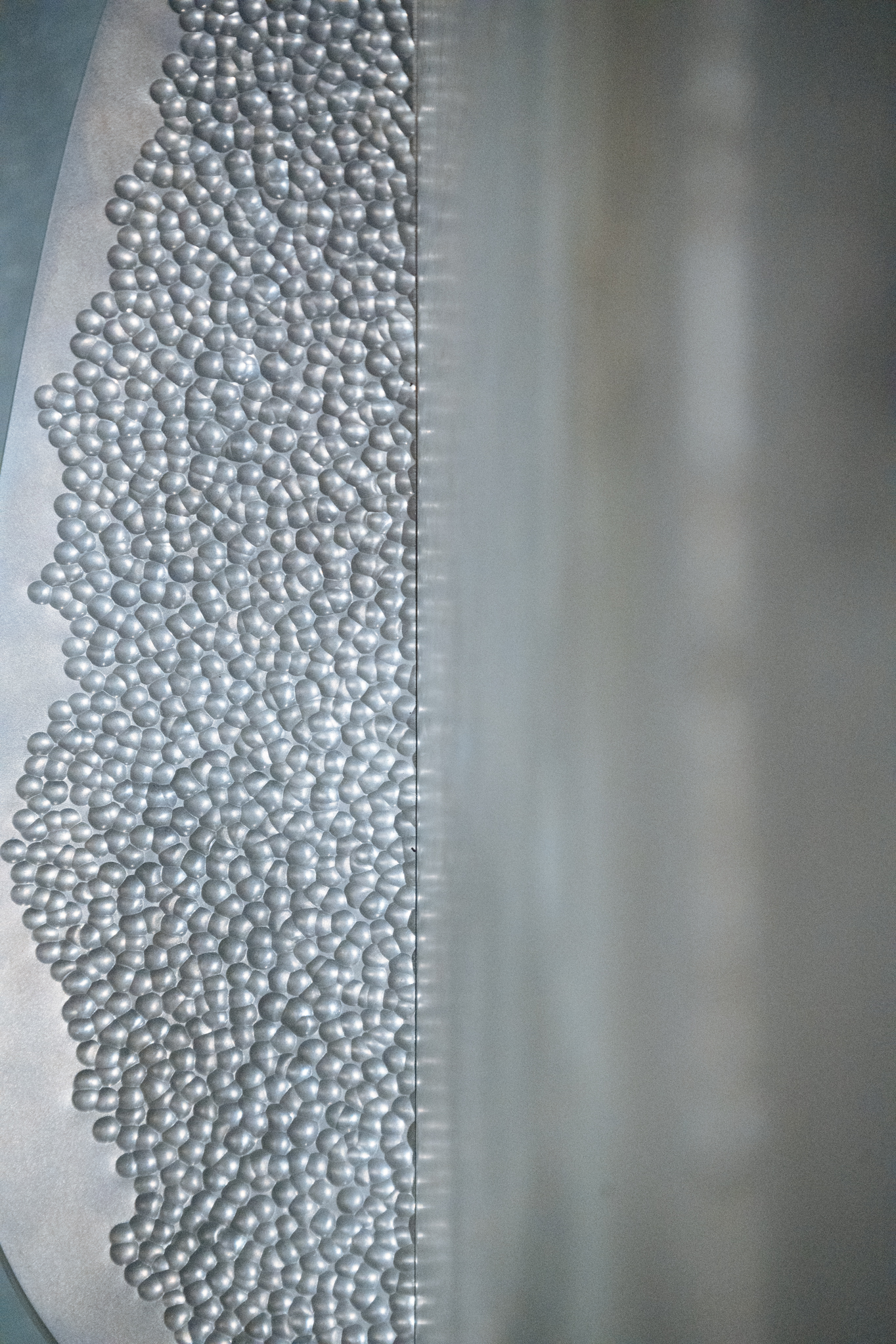
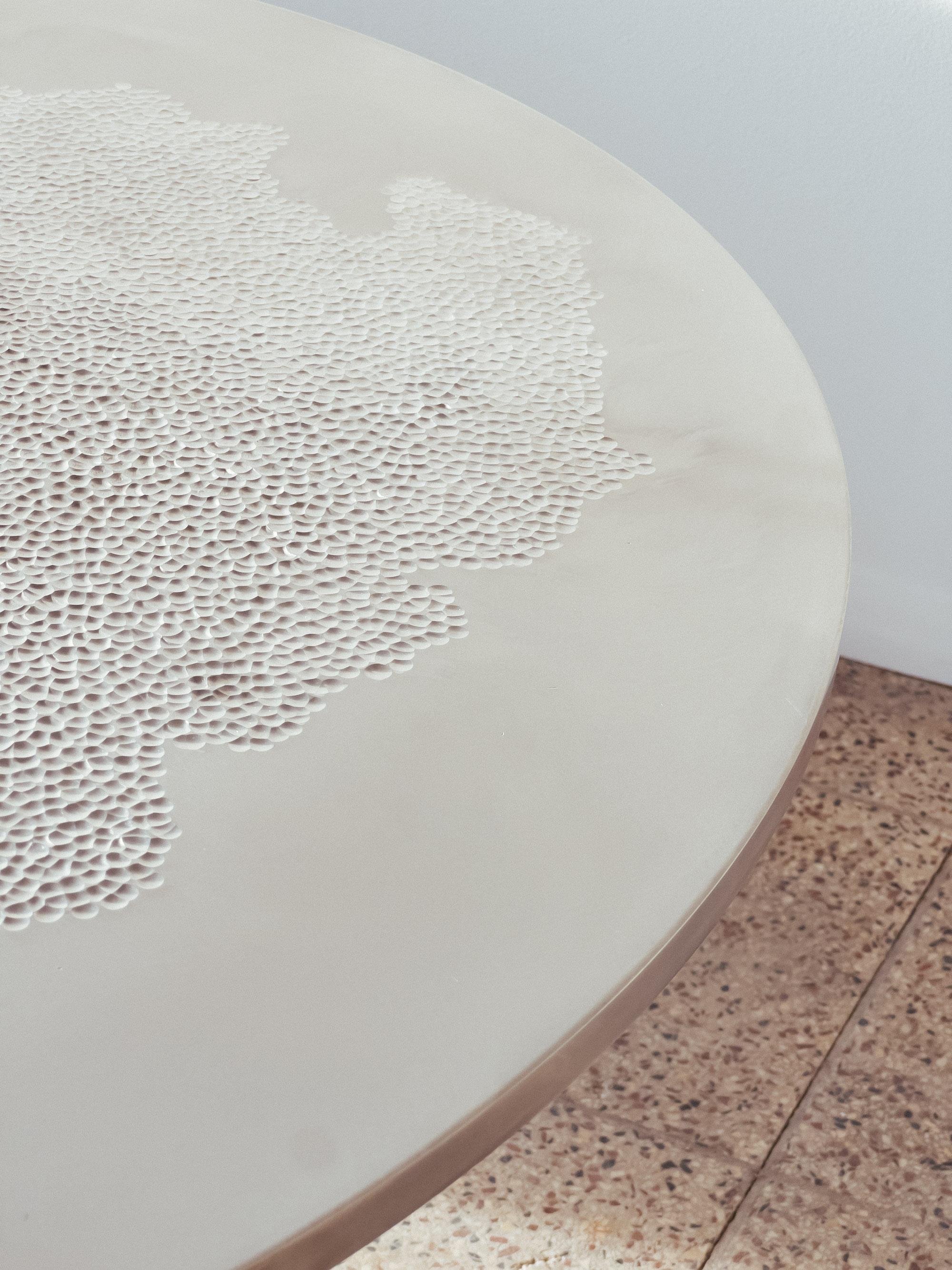
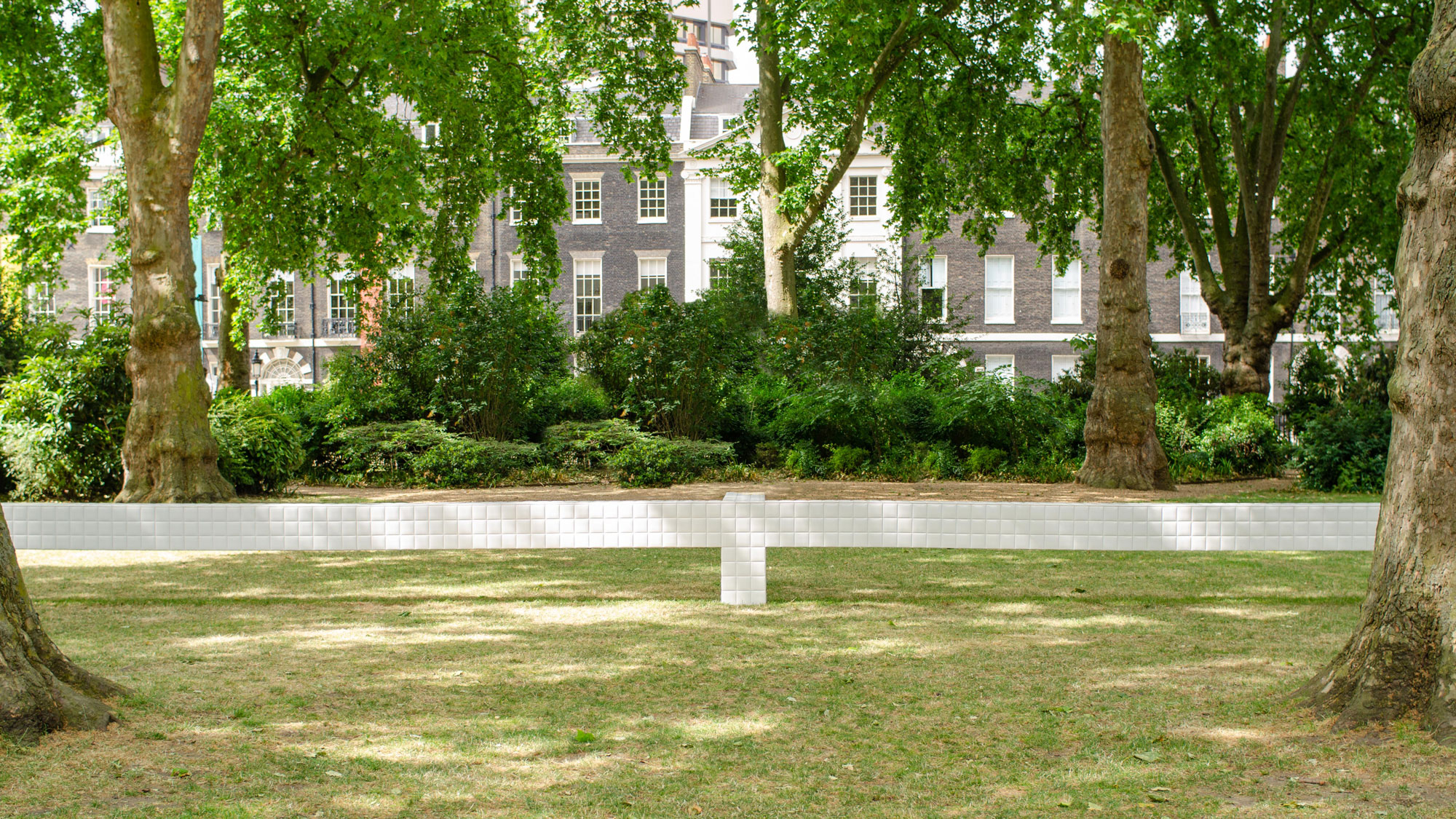
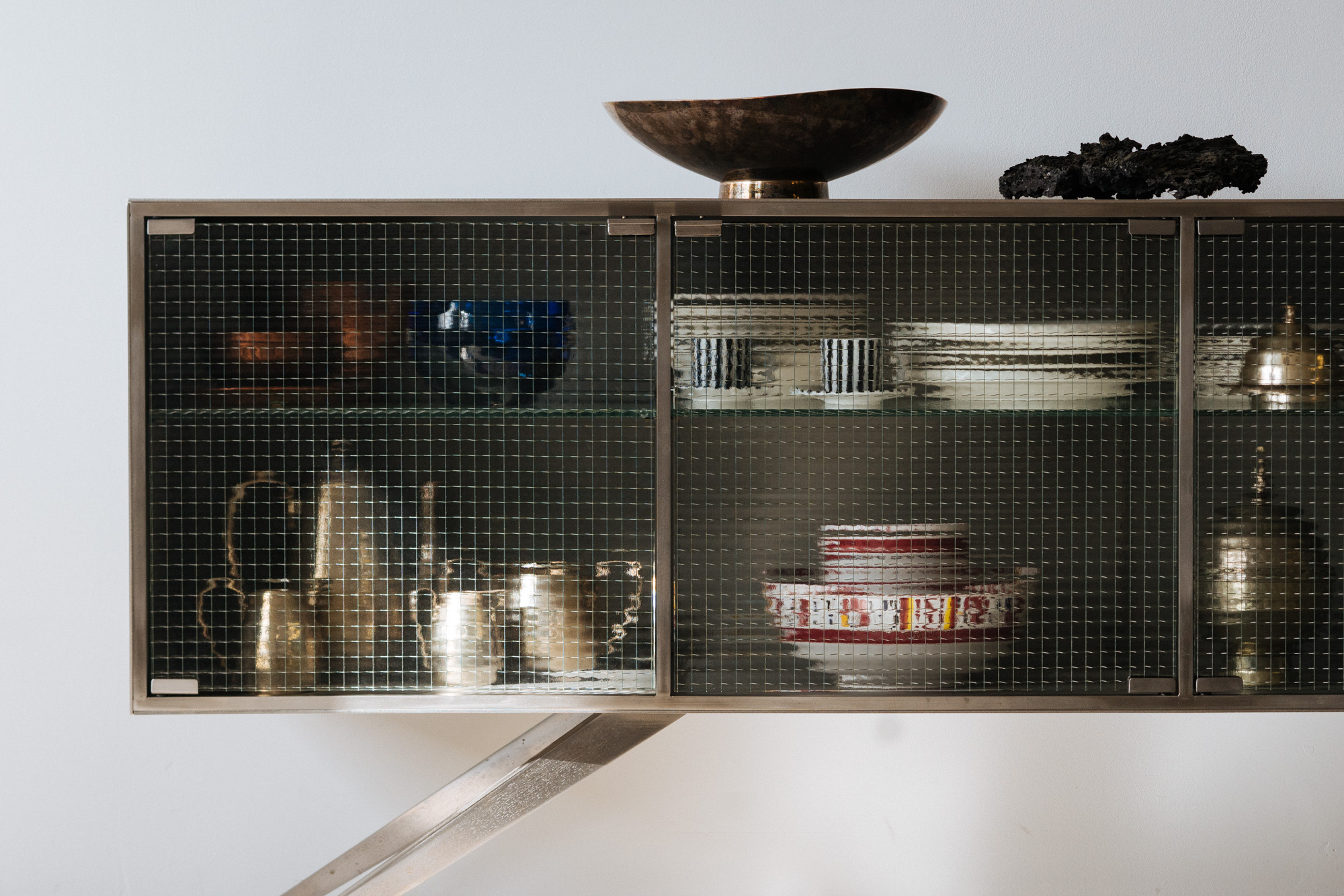
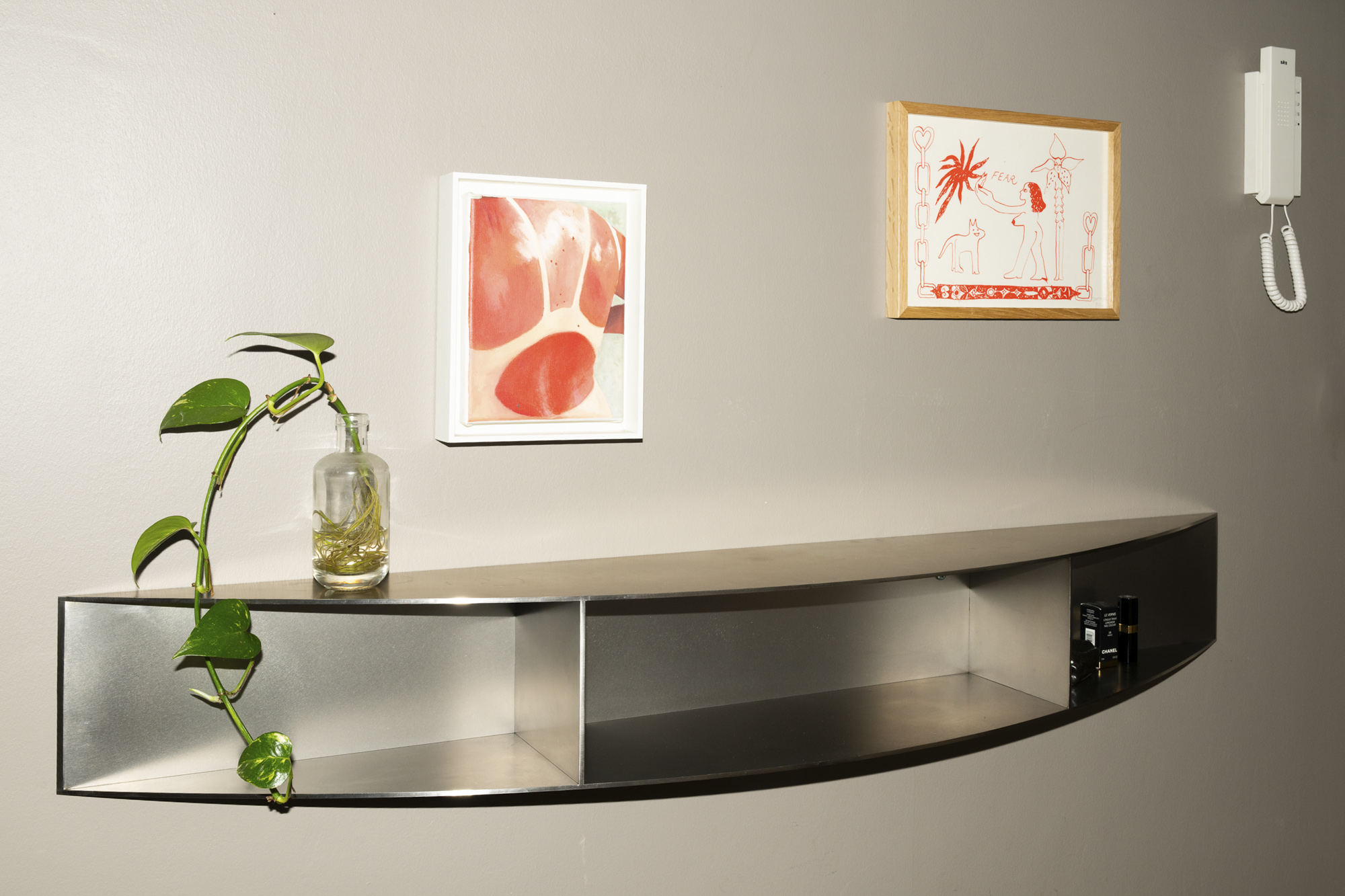
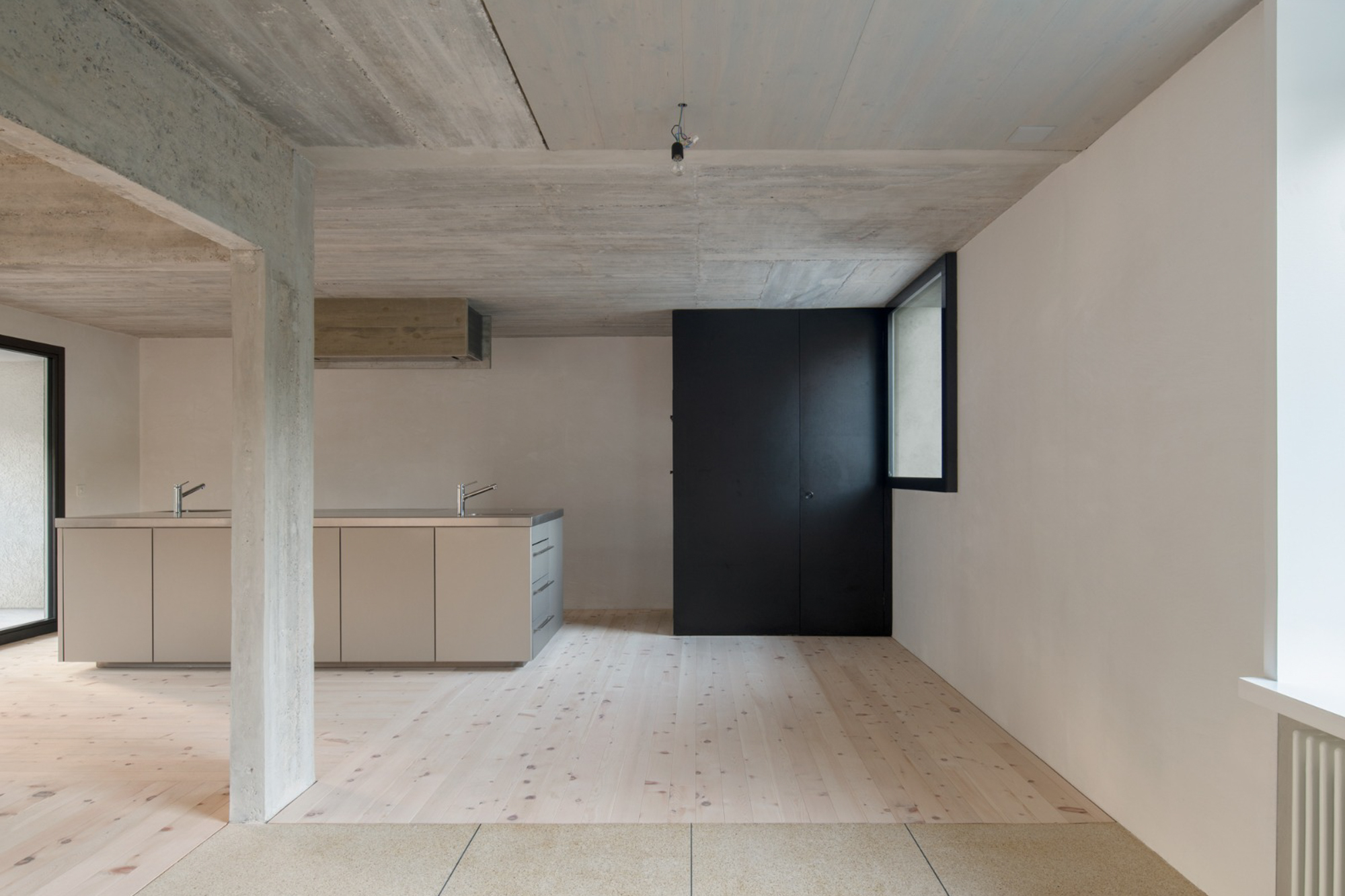
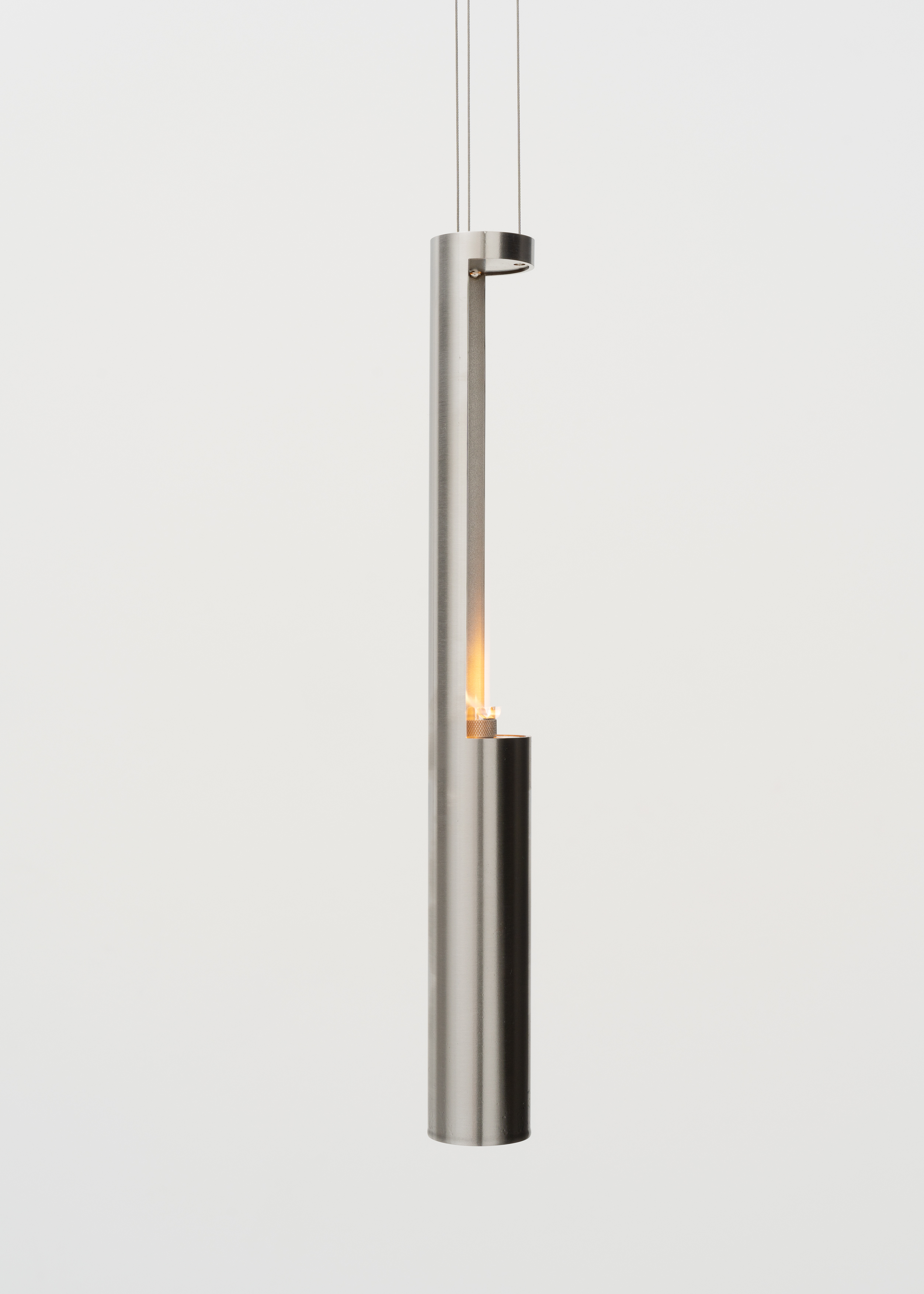
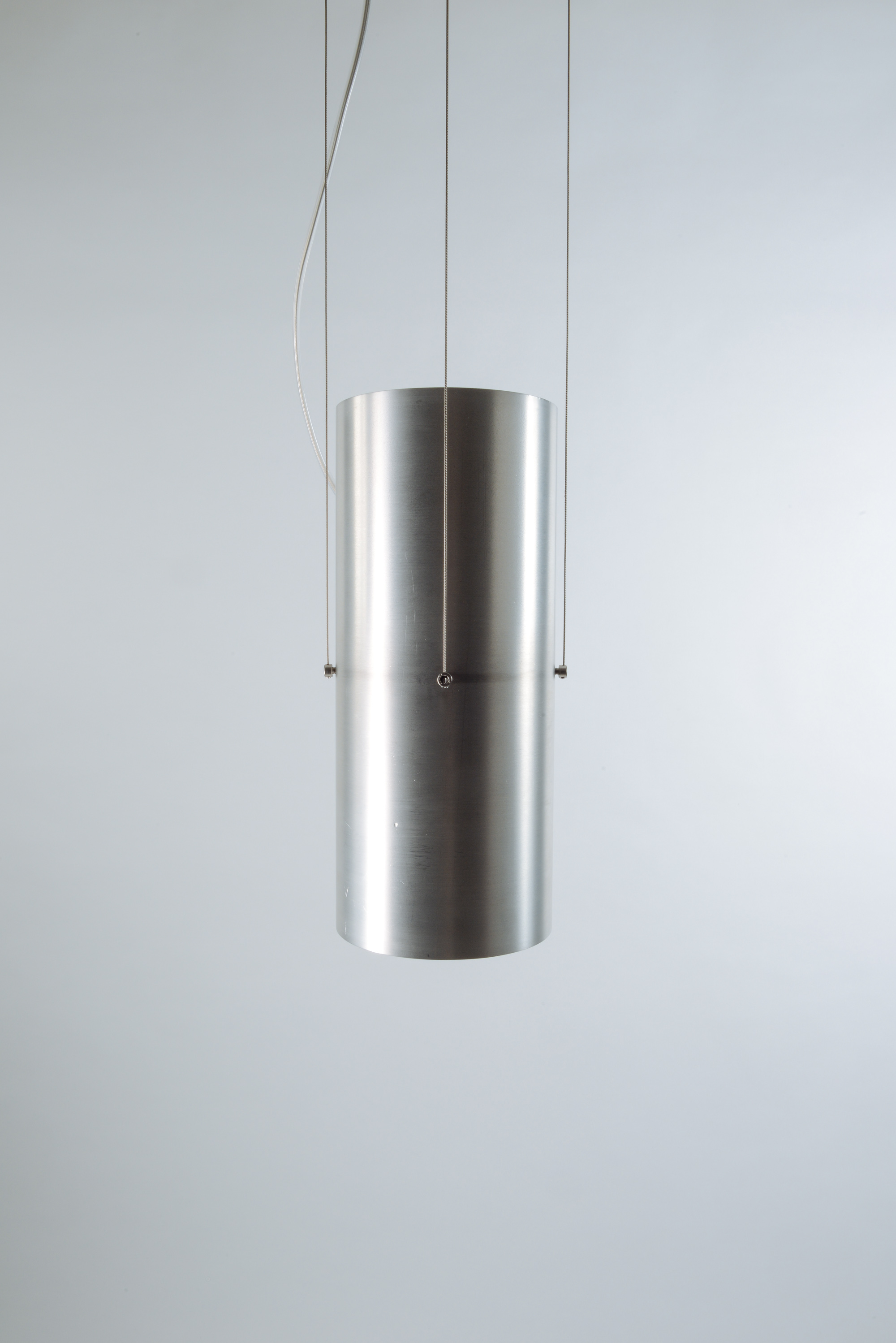
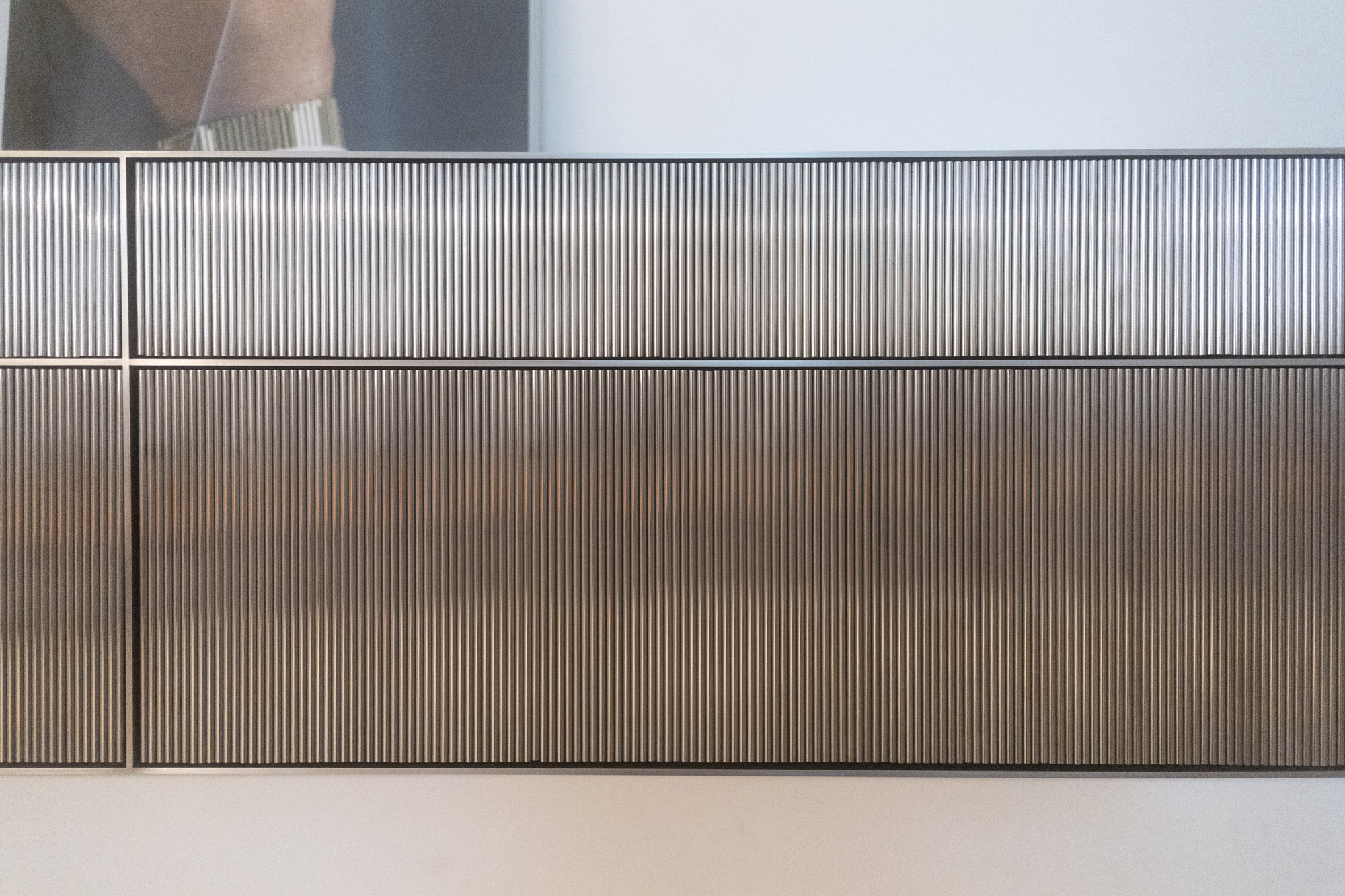
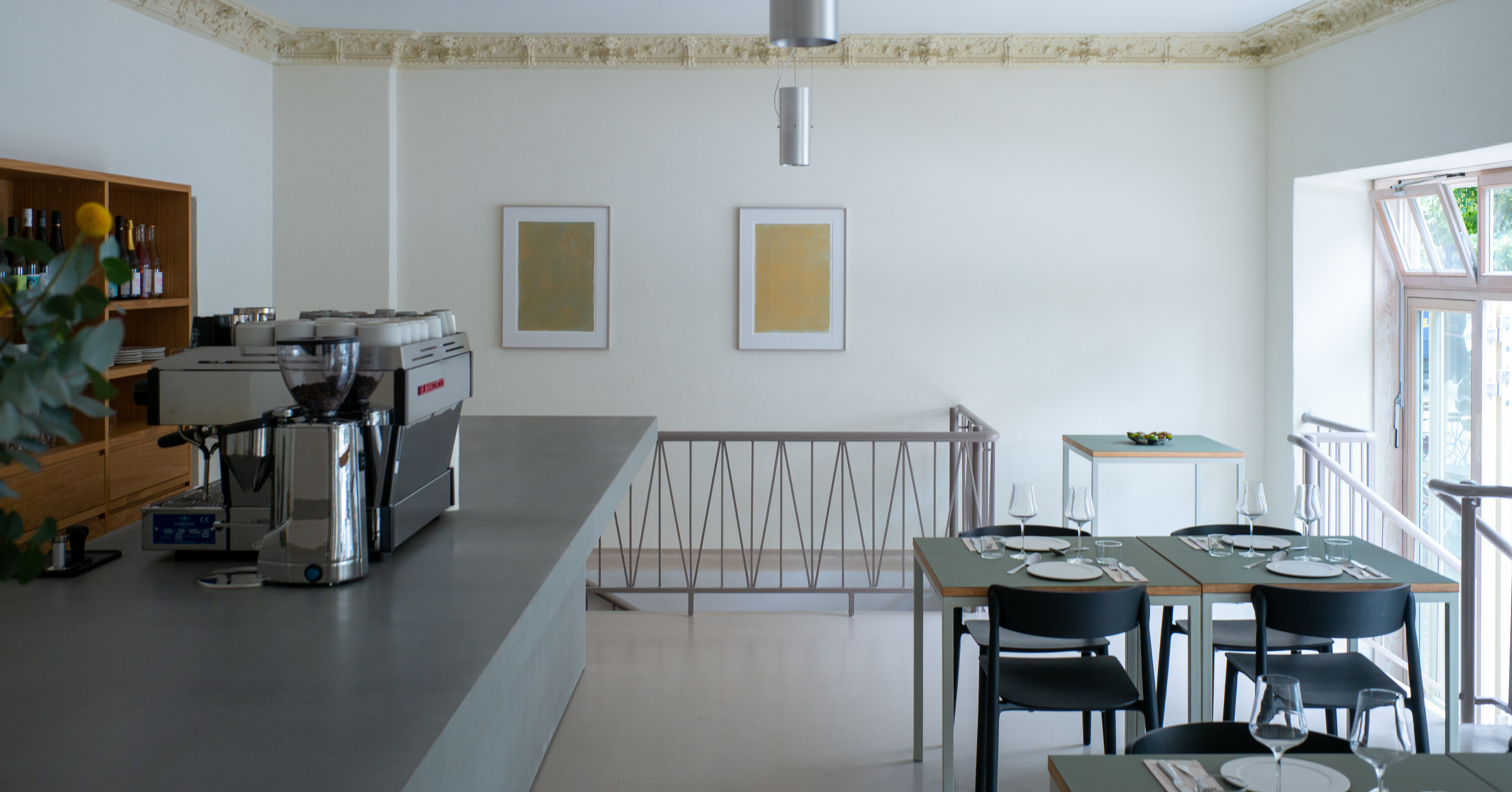




Studio Bergob is an architectural design practice specialising in lighting, furniture, and exhibition design. With a focus on handmade, custom pieces, the studio blends artisanal craftsmanship with contemporary forms. Its work centres on the transformation of industrial materials through hands-on experimentation—resulting in unique designs that foreground process, material integrity, and spatial presence. From concept to prototype to small-series production, Studio Bergob approaches each project as both a design and a making practice.